How I rebuilt my career and found a new professional path in a new country
At an age when many people are planning for retirement, I found myself starting over in a new country. Life doesn’t always follow the plans we make. Instead of retiring after a long academic career, I had to rebuild my life and career from scratch. Years later, I changed my career path from being an IT Lecturer/Tutor to becoming a Learning Designer.
Here, I will describe my journey through my career change: what worked for me and what didn’t. Let’s start.
Why Did I Change My Career?
About a decade ago, I was about two years away from retiring after a 23-year teaching career at a Venezuelan university. However, I decided to migrate with my family to another country.
A year after I finished my Computer Science degree, I joined the university as a lecturer. I worked in academia for 23 years. Although teaching is a rewarding career because it helps students gain knowledge and skills, we often become theoretical practitioners. In computing, getting a job in industry after a long teaching career can be difficult, as we may lack the practical skills required in the field.
In the new country, finding a stable job as a lecturer wasn’t an easy task. This was normal because I didn’t have any contacts in educational organisations, and I was unfamiliar with the recruitment process in the country.
After trying for several months with only partial success, I started thinking seriously about a career change.
The First Steps
Conducting Research
At the beginning, I was trying to figure out what my career change options were. Initially, I researched the available roles in Computer Science and IT, as well as roles in education (other than teaching) in the country, as those roles were aligned with my knowledge and skills.
The research involved not only visiting websites and reading blogs and other internet sources, but also contacting recruiters in the field and participating in events related to the technology sector.
Lesson learned: Research helps you discover opportunities you didn’t know existed.
Learning From Others
During this time, I had the opportunity to talk to other migrants who were on a similar journey to mine. In particular, I received a piece of advice that later changed the way I approached getting a job and career change. My colleague told me I know you had several studies including a PhD but you should take a qualification in adult and tertiary teaching in New Zealand.
Lesson learned: Listening is learning.
Reflecting on My Skills and Passions
Another thing I did was brainstorm my skills—not only my Computer Science and IT skills, but also the other skills I had gained through hobbies and extracurricular activities. These were key to selecting another career. Your transferable skills are often more valuable than you think.
A career change is an opportunity to choose a new role when you are better prepared than you were when you were young and inexperienced.
The Next Steps
Create a Shortlist
The next step was to create a shortlist of the career paths I would like to pursue. I wanted to have a few options to choose from, including continuing in my current career path. At that moment, I didn’t want to put all my eggs in one basket but instead have the opportunity to explore several paths.
Prioritise the Options
Of course, a career change takes time and costs money, so I couldn’t pursue every option on my list. I organised my list according to my skills and the available job opportunities. For me, one of the top options was to continue my current career path without making any changes.
Take Action
One of the key steps in the career change process is taking action towards the change; otherwise, I wouldn’t see any results. I realised that my career wouldn’t change unless I changed my habits, learned new skills, and tried new opportunities.
Therefore, I decided to follow my colleague’s advice and undertake training for my potential new career. Since I had limited financial resources, I combined free online courses from providers such as Coursera and edX with a low-cost course offered by a polytechnic.
I also had the opportunity to do some contract work in my new field, which I accepted to gain experience and develop the skills needed for the position.
Volunteer work is also an excellent opportunity to develop skills for a potential new role and build professional connections.
I also participated in several events related to a couple of the career paths on my shortlist, such as conferences, recruitment events, and events aimed at the migrant community. This helped me learn more about the sector and connect with people working in it.
Lesson learned: Career change isn’t about waiting for the perfect opportunity—it’s about taking small steps consistently.
Final Steps
Finally, I felt I was ready to apply for a new role. I created a new CV tailored to the Learning Designer role. I kept the relevant skills from my previous career and added the skills and training that were relevant to the new role. I also updated my personal statement and cover letter, explaining that I was changing my career path and was ready to begin a new career.
When I first applied for a Learning Designer role, I was a little worried about my technical skills; however, I still believed it was worth trying. After several applications, I was invited to an interview with a reputable organisation. Although I didn’t get the job, it was one of the best interviews I had ever had. I realised that I was ready for the new role. The next time I applied for a Learning Designer role, I secured my first job in my new career.
Throughout the journey, I realised that adapting was just as important as planning. Some opportunities didn’t work out, and I had to adjust my expectations, learn new skills, and keep moving forward.
Lesson learned: Career change is rarely a straight path, but being willing to adapt made all the difference.
In Summary
Looking back, I realised that my career change followed a simple framework:
Research → Reflect → Shortlist → Prioritise → Act → Adapt
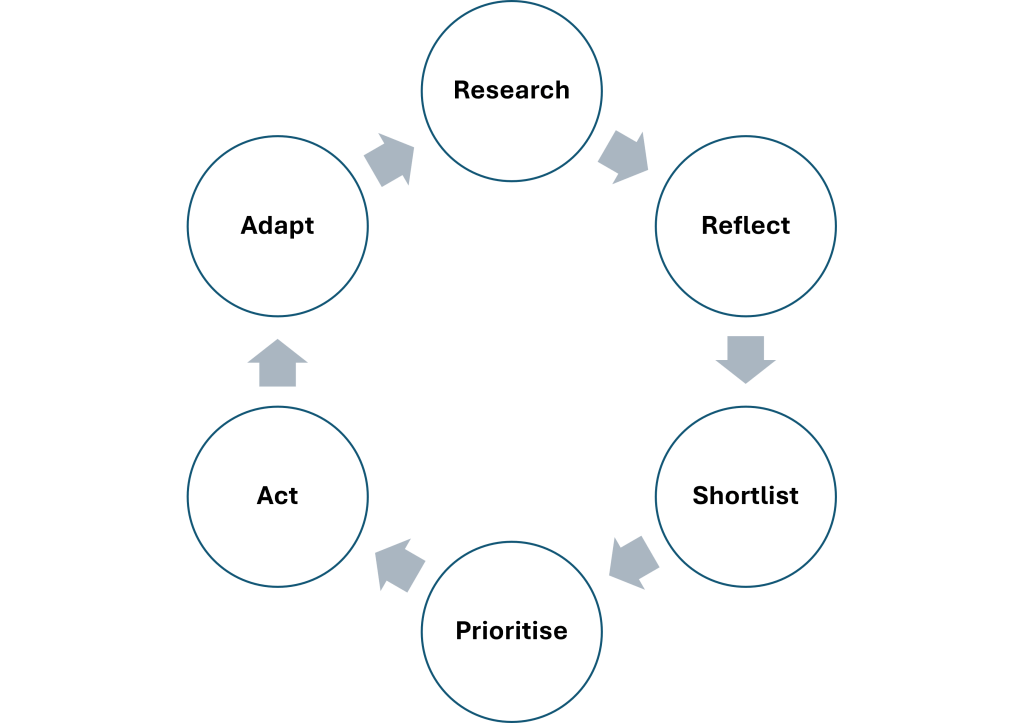
Although every career change journey is different, I hope this framework helps you navigate your own transition.
Have you changed your career? Please share your experience in the comments. What did you learn from your journey? I’d love to hear your story.
Starting over wasn’t easy, but it reminded me that it’s never too late to learn, adapt, and build a new future.
Read this article on Medium


Leave a Reply